< img height="1" width="1" style="display:none" src="https://www.facebook.com/tr?id=749085056746505&ev=PageView&noscript=1" />
Home > Blogs > Are Your Warehouse Lighting Standards Up to Par?
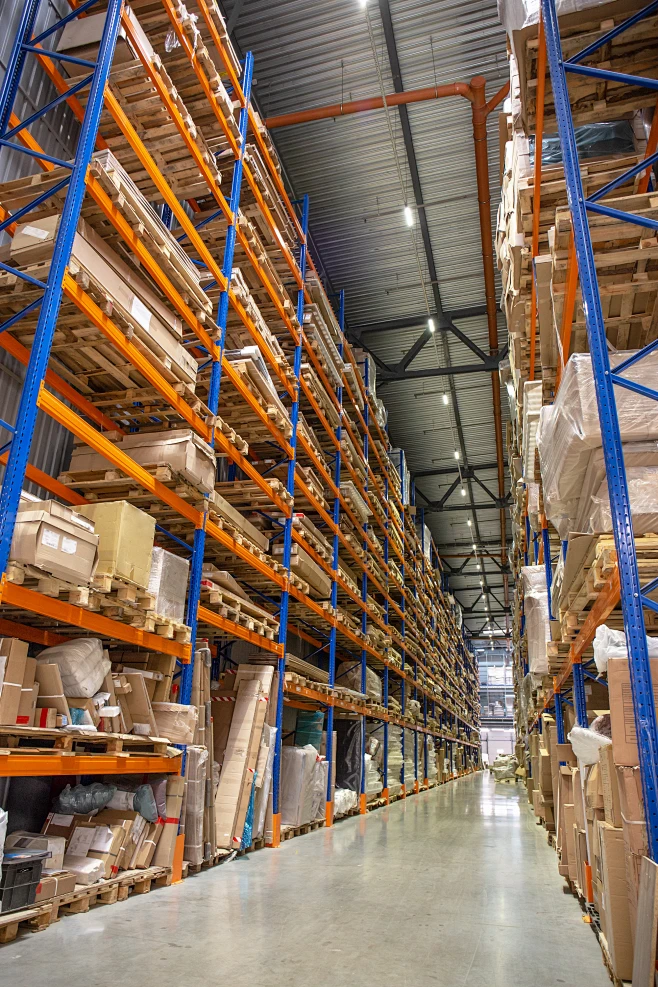
High ceiling lighting in high-bay warehouse

Are Your Warehouse Lighting Standards Up to Par?

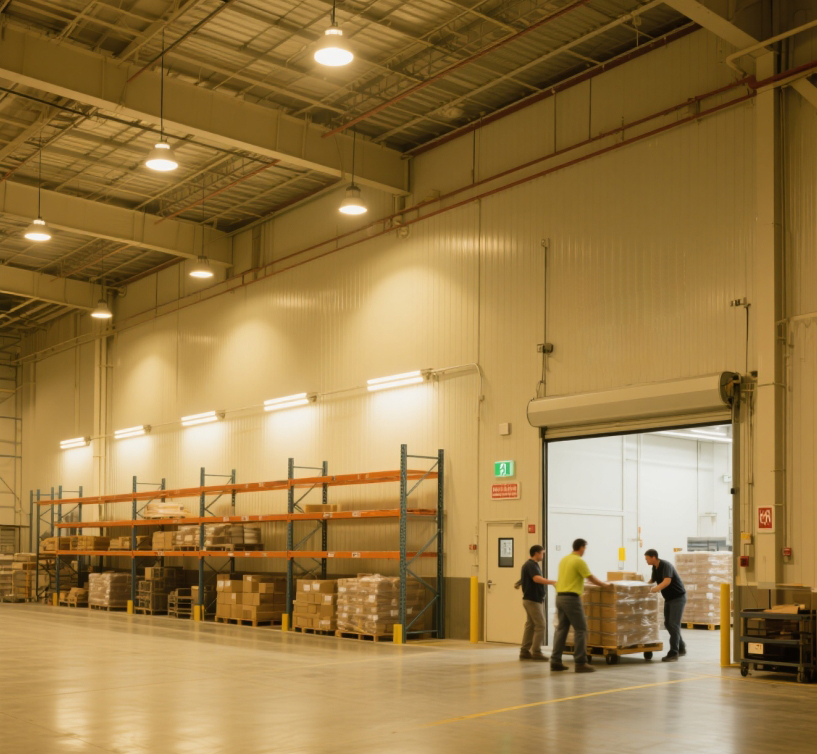
warehouse equipped with high bay lights and tri-proof lights

Are Your Warehouse Lighting Standards Up to Par?
OSHA Safety Guidelines and Lighting Solutions

In the industrial and logistics sectors, warehouses serve as critical material handling hubs, and the quality of their lighting directly impacts operational safety, work efficiency, and compliance risks. While the U.S. Occupational Safety and Health Administration (OSHA) has not established standalone standards for lighting in warehouses and other industrial facilities, its comprehensive regulations on workplace safety, emergency evacuation, and equipment operation form a key component of warehouse lighting standards and provide practical guidance for warehouse lighting design.

OSHA's Core Requirements for Warehouse Lighting

1. Illuminance Requirements: Different Areas, Different Standards

Although OSHA regulations do not directly specify exact light levels, in practice, the recommended illuminance values from the Illuminating Engineering Society (IES) are widely followed. Below are typical lighting requirements for various warehouse zones:

warehouse lighting standards based on OSHA recommendations

In areas with tall stacks, dense shelving, and frequent operations, it is also important to consider beam distribution, mounting height, and glare control. Such areas often rely on warehouse high bay lighting to ensure sufficient and uniform illumination.

2. Emergency Lighting: Stay Safe During Power Outages

According to OSHA 1910.37(b), all workplaces with evacuation risks must have a reliable emergency lighting system. In the event of a power outage or other emergencies, emergency fixtures must provide lighting for at least 90 minutes to ensure safe evacuation of personnel.

Additionally, emergency lighting must comply with NFPA 101 Life Safety Code requirements, including light intensity, backup power systems, and regular maintenance. In many high-ceiling facilities, high bay led warehouse lights are integrated into emergency lighting design to offer broader coverage and higher brightness levels.

3. Lighting for Mobile Equipment Operations: Clear Vision for Forklifts

warehouse with LED tri-proof linear lights installed on the high ceiling

In warehouses where forklifts and electric pallet trucks are used, OSHA 1910.178(h)(2) clearly states that if ambient light is insufficient for safe operation, onboard work lamps or enhanced site lighting must be installed.

Especially in nighttime loading areas, enclosed storage rooms, or cross-aisles between tall racks, quality lights for warehouse can significantly reduce the risk of collisions, pinching, and other accidents.

4. Environmental Adaptability and Safety: Dustproof, Waterproof, Impact Resistant

Warehouse environments often present challenges such as dust, moisture, oil mist, and temperature fluctuations. Therefore, lighting equipment must meet specific physical protection standards:

  • IP Rating: IP65 or above is recommended;
  • Impact Resistance: IK08 or higher;
  • Service Life: Industrial-grade LEDs typically require ≥50,000 hours;
  • Certifications: UL, CE, DLC, and RoHS are important indicators of product reliability.

To meet these environmental demands, selecting a durable led light for warehouse with high protection ratings is essential.

How do lighting fixtures meet OSHA requirements?

1. Luminous Flux and Luminous Efficacy

Luminous flux (Lumen) represents the total amount of light emitted by a fixture, while luminous efficacy (lm/W) indicates how much light is produced per watt of power consumed, making it an important energy efficiency metric.

For example, to achieve 200 Lux in a high-bay warehouse area, a high bay light with luminous flux greater than 20,000lm is needed to provide adequate lighting coverage at mounting heights of 6 meters or more. For energy-efficient and high-performance warehouse lighting, the best led lighting for warehouses is an ideal choice.

2. Installation Methods and Beam Angles

The installation method (ceiling mounted, chain suspension, bracket, slot, etc.) and beam angle (wide, medium, narrow) directly affect lighting distribution and visual comfort. Improper beam angles can cause glare, uneven illumination, and lighting spots, impacting personnel safety.

In high-bay warehouses: it is recommended to use warehouse pendant lights with narrow or medium beam angles (60°–90°) to focus light downward and reduce energy loss.

In dense shelving areas: linear fixtures such as LED Linear High Bay lights should be used, which provide symmetrical or directional lighting to precisely cover deep areas, reducing shadows and dark spots.

For loading docks or aisles: wide beam angle (≥120°) tri-proof lights are recommended to enhance uniform floodlighting.

Warehouse with ceiling tri-proof lights

3. Protection Ratings

In warehouses exposed to dust, moisture, corrosive gases, or impact risks over long periods, the structural protection of lighting fixtures is crucial.

common IP protection ratings and descriptions

IK impact resistance rating:

IK08 or higher is recommended, especially for areas with mechanical operations and frequent collisions. In such environments, choosing warehouse pendant lighting that meets protection standards can effectively extend fixture lifespan and ensure safe operation.

4. Optional Emergency or Smart Sensing Features

OSHA clearly states that workplaces must maintain at least 90 minutes of emergency lighting in the event of a power outage. This means fixtures or systems should support emergency modules. By integrating modern warehouse lighting solutions, facilities can not only improve lighting flexibility and efficiency but also provide intelligent records and data for OSHA inspections.

Emergency modules include built-in lithium batteries, external power packs, and centralized controllers, which must be regularly tested and comply with NFPA requirements.

Smart sensing features:

  • Motion sensors: automatically turn on lights when movement is detected, improving energy efficiency;
  • Daylight sensors: adjust brightness based on ambient light;
  • Networked controls: manage lighting zones via Zigbee, DALI, or Bluetooth.
High ceiling lighting in high-bay warehouse

5. Certifications and Regulatory Compliance

Using lighting products that are certified by recognized authorities is key to ensuring safety, reliability, and environmental performance—especially valuable during OSHA inspections and project approvals. For businesses seeking efficiency and compliance, selecting the best led lights for warehouse ensures both high performance and adherence to multiple certification standards.

Common certifications in the North American market include:

  • UL: electrical safety;
  • DLC: energy efficiency and performance, often required for rebate programs;
  • ETL, FCC, RoHS, CE: covering electronic safety, environmental protection, and electromagnetic compatibility.

Common Types of Industrial Lighting Fixtures that Meet OSHA Requirements

The following are common types of lighting fixtures used in warehouses that meet OSHA requirements:

recommended standard lighting fixtures for warehouses in different regions

The core purpose of OSHA’s warehouse lighting standards is to protect employee safety and ensure visibility for daily operations. These standards are not only a means to avoid penalties but also an important path to improve productivity and employee satisfaction.

By selecting high-quality industrial lighting equipment that complies with OSHA standards, companies can ensure operational safety while reducing maintenance costs, improving energy efficiency, and achieving long-term sustainable warehouse management goals.

Leave a Comment

Your email address will not be published. Required fields are marked *

This site uses Akismet to reduce spam. Learn how your comment data is processed.

Scroll to Top

Request Technical Pricing

Get your technical solution within 24 hours.  Submit your project requirements below.

Your information is secure and will never be shared with third parties.

Let's Get Started!

Download Resources

We will send the resources to your mailbox once you have finished the email form. No Spam.

Start Your Project Solutions

Tell us about your project needs, and our engineers will tailor a lighting plan for you within 24 hours.

Your information is secure and will never be shared with third parties.

Download Resources

We will send the resources to your mailbox once you have finished the email form. No Spam.