
Rising costs of raw materials in LED
(2025 Update)
The LED industry has grown steadily in recent years thanks to its energy efficiency, durability, and long service life. However, behind this success, manufacturers now face strong cost pressures as raw material prices remain volatile. In 2025, aluminum, copper, and rare earth elements have become especially expensive, creating serious challenges across the supply chain. These challenges are central to discussions around LED material cost, which directly affects global pricing and competitiveness.
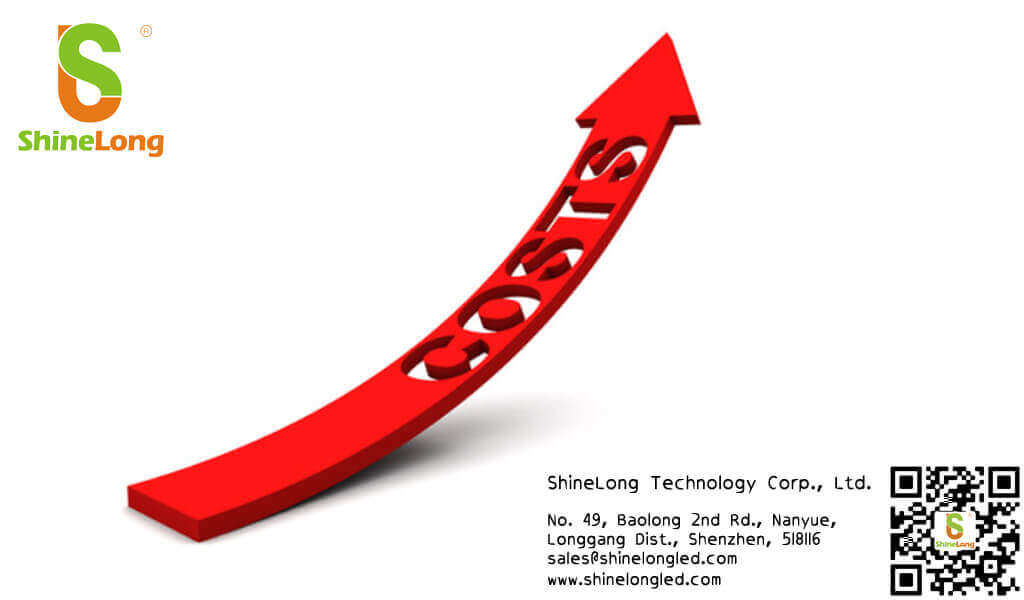
Raw Material Market in 2025
Aluminum prices rose by more than six percent compared to last year and reached about $2,573 per metric ton. This increase resulted mainly from supply shortages and production controls in major producing countries. Copper showed even stronger gains. In the U.S., futures climbed 26 percent to over $5 per pound, well above the global average, as tariffs and policy measures boosted domestic demand. Rare earth elements such as gallium and europium also stayed highly volatile because of their central role in LED phosphors and semiconductors. Moreover, China’s dominance in this market fueled further uncertainty. Meanwhile, higher energy and transportation costs, combined with new tariff measures, added additional strain on the overall led raw material cost, making it one of the industry’s biggest concerns in 2025.
Drivers of Cost Increases
Several factors pushed raw material costs higher in 2025. First, trade policies and tariffs, especially those involving the U.S. and China, disrupted traditional supply chains and created strong price pressure. Second, supply-demand imbalances played a major role, with restrictions on aluminum output and a tight copper market accelerating price hikes. For companies calculating the cost of led bulb raw material, these global dynamics directly influenced product pricing and profit margins. In addition, the LED industry’s heavy dependence on rare earth elements made it vulnerable to geopolitical risks. On the other hand, technological innovation started to provide some relief. Manufacturers explored alternatives such as quantum dot materials, which reduce reliance on rare earths, and recycling methods that recover valuable elements like gallium. Therefore, these strategies became early steps toward addressing long-term LED material cost trends.
Industry Impacts and Responses
The impact of rising material prices appeared differently across market segments. In high-end commercial and automotive lighting, customers accepted price adjustments more easily, allowing suppliers to pass on part of the cost. In contrast, consumer markets remained highly competitive, and companies absorbed more of the burden. As a result, many businesses changed their procurement strategies. For instance, those evaluating led bulb manufacturing plant cost raw material now faced tougher investment decisions as supply chain risks grew. At the same time, suppliers became more aware that packaging material costs led products were turning into a non-negligible part of total expenses. In addition, digital tools gained importance, as AI-driven procurement platforms helped companies forecast costs and manage inventory more effectively.
Outlook for the LED Industry
Looking ahead, manufacturers will need a combination of strategies to manage cost risks. Diversifying supply sources, including recycling channels, will be essential to reduce dependency on single-country suppliers. In addition, technology will remain a key driver of cost control, with innovations in packaging, substrates, and alternative materials offering ways to reduce raw material use while improving product performance. Companies also need to monitor LED material cost forecasts closely, as market fluctuations are expected to continue throughout 2025. At the same time, rising led lights cost and growing concerns about led lights energy cost are shaping how end users view value, making efficiency and sustainability more critical than ever for long-term competitiveness.
It was updated on Aug. 18, 2025. There is much news you never wanna missed as below:
“China announces year-long inspection of air quality in northern cities”
“About 10,000 polluting companies were ordered to suspend production or shut down by the end of June…”
“The whole supply chain has been affected by the inspections,”
“METALS-China aluminum hits 5-year high on capacity closures”
The LED market continues to expand, but rising raw material costs present a shared challenge for the entire industry. Aluminum, copper, and rare earth elements remain at high price levels, while tariffs and geopolitical tensions add more uncertainty. To remain competitive, companies should embrace innovation, strengthen supply chain resilience, and adapt procurement strategies. By focusing on high-value markets and investing in sustainable solutions, LED manufacturers can turn raw material challenges into opportunities for long-term growth.