What is a Driver for an LED Light?
LED lights are more and more used in homes and commercial settings due to their energy efficiency, environmental friendliness, and long lifespan.
However, you may not know that LED lights cannot be directly connected to our household power supply. Instead, they require a critical component—the LED light driver. If the LED chip is the “heart” of the lamp, then the driver is its pacemaker. Without a driver, LED lights cannot operate stably.
Do LED Lights Need a Driver?
The answer is yes—most LED lights need a driver. The reason is simple: LEDs operate on low-voltage direct current (DC), while household and office power supplies provide high-voltage alternating current (AC). The gap is huge. If you connect 220V or 110V AC directly to an LED chip, the light will burn out instantly.
For example:
- A standard white LED chip usually works at 2V–3.5Vwith a current of only 20–100mA.
- Household electricity is typically 220V (China, Europe) or 110V (US), far beyond what LED chips can handle.
The lighting LED driver works like a transformer + regulator, converting dangerous AC power into safe DC power.
There are exceptions: common bulb types such as E27, E14, or GU10 already integrate a miniature driver inside. Users can screw them directly into sockets without needing a separate driver. But for more complex lights such as tri-proof lights, linear lights, LED panel light driver systems, downlights, strip light driver, or industrial fixtures, a dedicated external driver is essential for proper operation.
What Does a Driver Do in an LED Light?
Think of the driver as the power manager of an LED lamp. Beyond simply providing electricity, its main functions include:
1.Converting AC to DC
LEDs only “eat” direct current, but home outlets supply alternating current. The driver for led lights acts as the converter, processing AC into usable DC power.
2.Regulating Voltage and Current
LED chips are highly sensitive to current—just a slight increase can drastically reduce their lifespan. The led driver function is to keep current stable, ensuring LEDs don’t run underpowered or overloaded.
Example: A 10W downlight normally operates around 300mA. If the current rises to 500mA, the light may appear brighter, but its lifespan could drop from 30,000 hours to just a few hundred.
3.Providing Safety Protection
High-quality drivers include over-voltage, over-current, short-circuit, and thermal protection—much like airbags in cars. If something goes wrong, the driver adjusts or cuts power, preventing damage or fire hazards.
Without a proper driver, LEDs face shorter lifespans and safety risks.
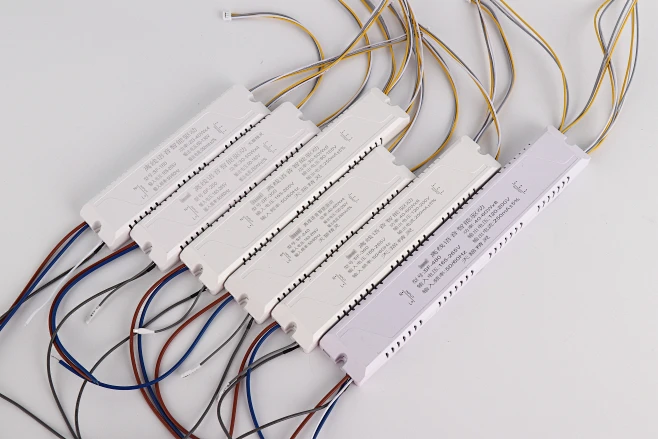
What Does an LED Driver Look Like?
LED light drivers come in different shapes and sizes depending on their use and power rating.
And External drivers are usually labeled with:
- Input Voltage (e.g., AC 100-240V)
- Output Voltage (e.g., DC 24V)
- Output Current (e.g., 700mA)
- Maximum Power (e.g., 50 wattor 100w LED light driver)
- Certifications like CE, UL, or RoHS
Small drivers:
Found in LED strips, under-cabinet lighting, and recessed lights; about the size of a matchbox.
Medium drivers:
Used in ceiling light driver systems, panel lights, or commercial downlights; typically rectangular plastic or metal cases about palm-sized.
High-power drivers:
Used for industrial and outdoor applications such as LED flood light driver, street lights, or high bays; often larger with aluminum housings for cooling and waterproofing.
Where Is The Driver for LED Lights?
The simplest method is when you buy an LED panel light, the rectangular box packaged alongside it is the external driver. Typically, there are two driver mounting configurations:
1. Fixtures with built-in drivers
Lights with built-in drivers integrate the LED driver directly into the fixture body. This design simplifies installation, as the fixture can be connected directly to the power source without requiring an external driver. It also reduces wiring complexity, maintaining an overall clean and aesthetically pleasing appearance.
2. Fixtures requiring external drivers
Light fixtures with external drivers separate the LED driver from the lamp body, typically housed in a separate enclosure. This design provides superior thermal management, thereby extending the overall lifespan of the system. It also facilitates the replacement or upgrade of the driver alone when necessary, without requiring the entire luminaire to be replaced. Consequently, it offers a flexible solution for industrial, outdoor, or large-scale lighting projects.
How Do I Choose an Driver for My LED Light?
Choosing the right driver is like choosing the right engine for a car. Here’s what to consider:
Match Electrical Parameters
Output voltage and current must align with the LED fixture.
Example: A 12V strip requires a driver for led light strip with 12V output.
Allow Power Margin
Choose a driver with about 20% more wattage than your LEDs consume.
Example: A 40W total load should use at least a 50W driver.
Dimming Capability
If you need brightness control, select a dimmable light driver compatible with your system.
Environmental Conditions
Indoors: standard drivers are fine.
Outdoors or in factories: use rugged Philips LED driver or waterproof models.
Certification & Brand
Look for CE, UL, or RoHS certified products. Reliable brands offer better stability and easier LED light driver replacement or repair when needed.
The LED light with driver may seem like a small accessory, but it is the backbone of LED lighting. High-quality drivers not only power LEDs but also protect fixtures, extend lifespan, and deliver stable, uniform illumination.
Next time you shop for LEDs—whether it’s a led tube light driver, ceiling light driver, or a simple driver for LED lights—don’t just focus on brightness. Pay attention to the hidden hero: the driver. Understanding how to choose the right one will maximize the value of your LED lighting.